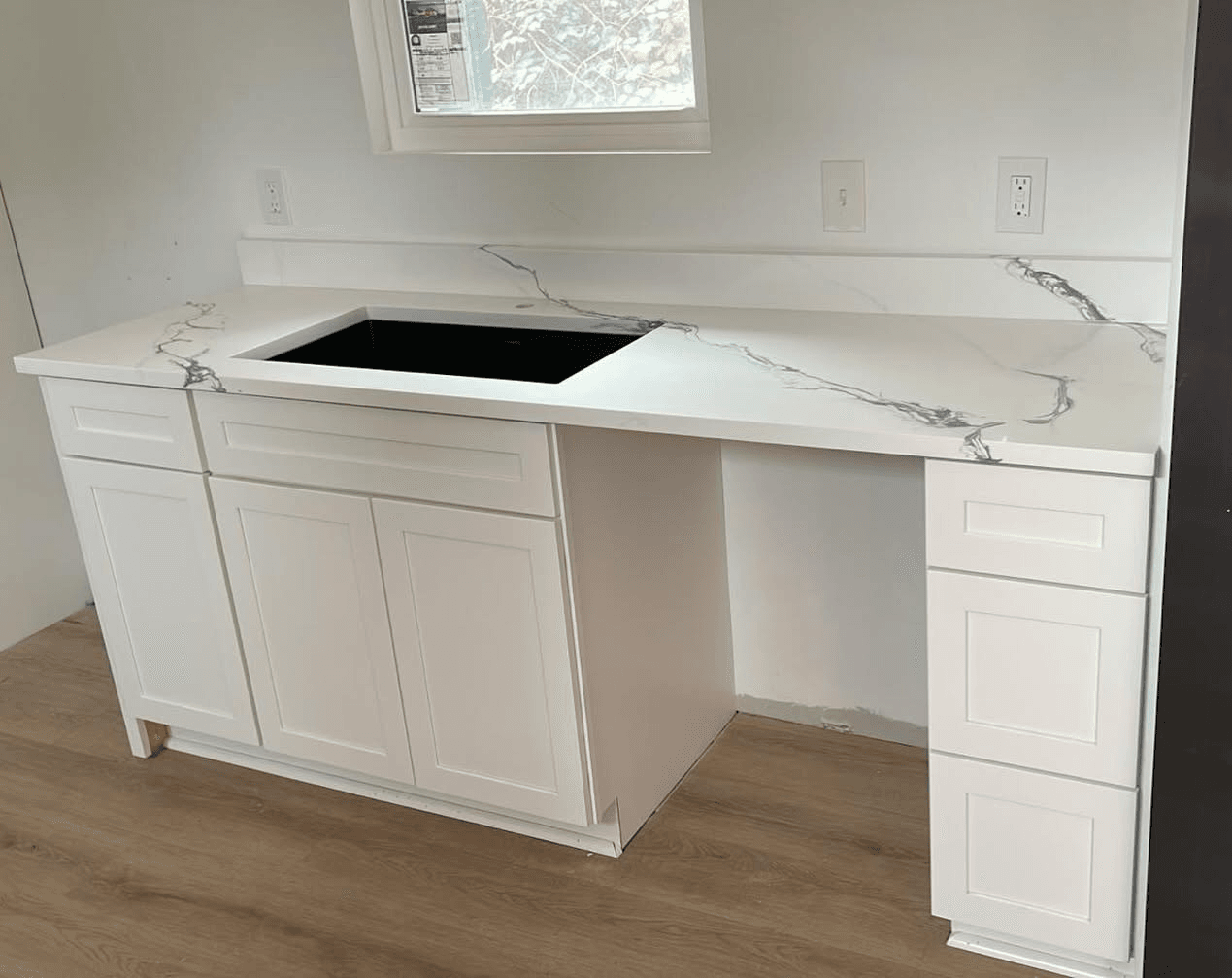
Countertop thickness affects how a kitchen or bathroom looks, feels, and performs. It can influence durability, edge profiles, cost, support needs, and the final appearance of the room.
Natural stone and engineered surfaces are available in different slab sizes. The most common choices are 2 cm and 3 cm, but the best option depends on the material, layout, cabinet support, and design goals.
This guide explains common thickness standards, the difference between 2 cm and 3 cm slabs, how thickness affects strength, and how to choose the right option for a kitchen or bathroom project.
What Is the Standard Thickness of Stone Countertops?
Most stone countertops are available in 2 cm and 3 cm slab thicknesses. These sizes are common for granite, quartz, marble, quartzite, and other premium surfaces.
The actual slab thickness is not always the same as the way the finished edge appears. Fabricators can sometimes build up or miter an edge to create the look of a thicker countertop.
The right countertop thickness depends on the material, local fabrication practices, project budget, and installation requirements. Some materials are more commonly used in one thickness than another.
A thicker surface can look more substantial and bold. A thinner surface can look lighter, cleaner, and more modern.
Material use, fabrication, transportation, and installation can all be affected by thickness. Heavier slabs may also require stronger cabinet support.
2cm vs. 3cm Countertops: What's the Difference?
|
Feature |
2 cm Countertops |
3 cm Countertops |
|
Appearance |
Slim, modern profile |
Thicker, more substantial profile |
|
Weight |
Lighter |
Heavier |
|
Edge |
Often needs a built-up edge |
Full-thickness edge is usually possible |
|
Support |
May need additional support |
Typically needs less reinforcement |
|
Best For |
Bathroom vanities, walls, lighter applications |
Kitchen counters, islands, large surfaces |
|
Cost |
Usually less material |
Usually more material |
Material Also Matters
Quartz countertops, granite countertops, and marble countertops can all have different fabrication and support needs. The stone material should always be considered along with thickness.
Does Countertop Thickness Affect Durability?
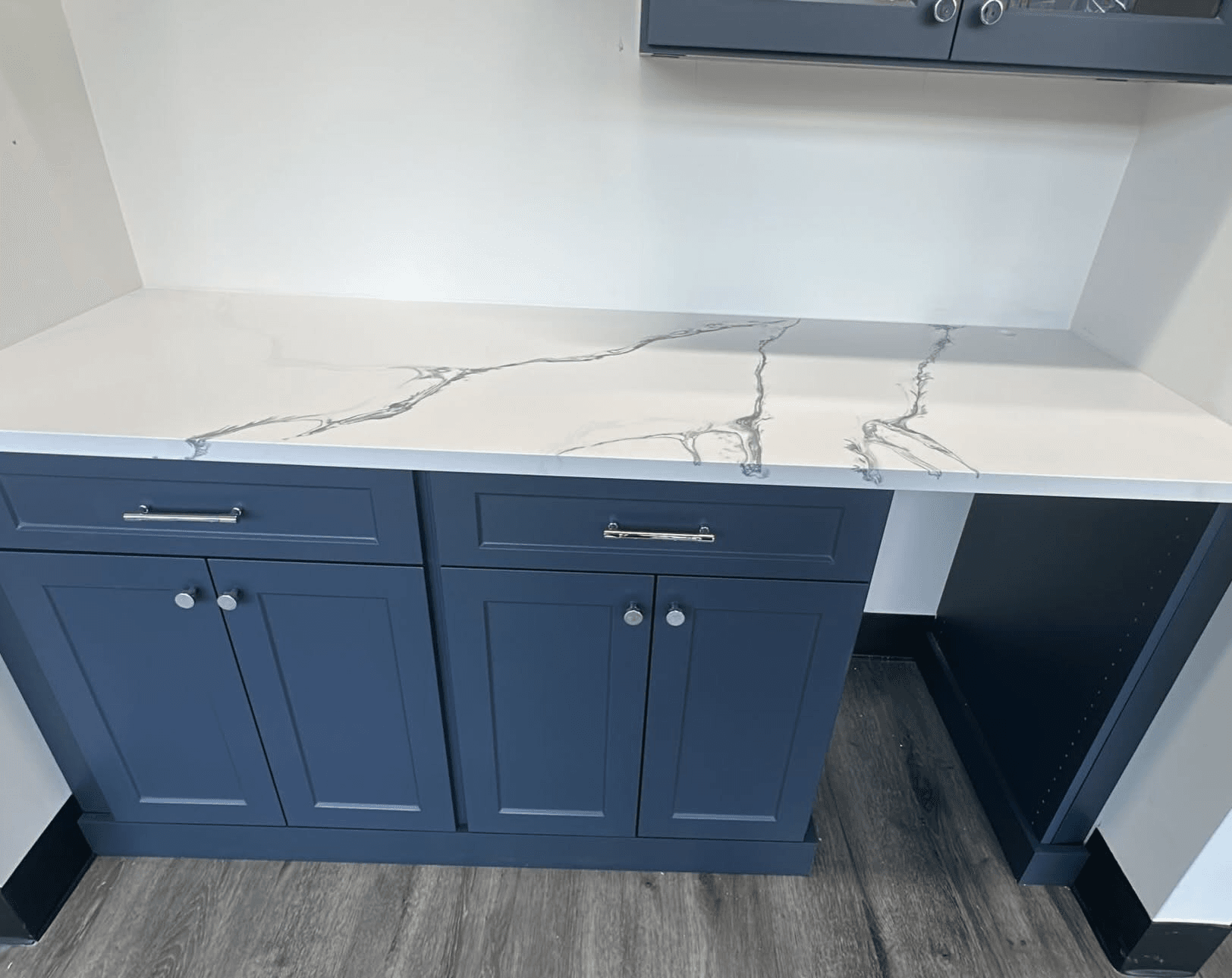
A thicker slab may offer more structural strength in some situations. This can be helpful around large islands, overhangs, or areas with heavy daily use.
Thickness alone does not guarantee performance. Cabinets, seams, cutouts, brackets, and installation quality all play a major role in durability.
Sink cutouts, cooktop openings, corners, seams, and overhangs need careful support. Even a thick slab can be damaged if it is poorly supported.
A thicker surface is not always the best choice. Some spaces look better with a slimmer profile, and some materials perform well with proper fabrication and support.
Accurate measuring and careful fabrication are essential. A well-planned countertop can perform better than a thicker slab that is not installed correctly.
What Thickness Is Best for a Kitchen Countertop?
Start With the Design Goal
The best thickness depends on the look the homeowner wants. A modern kitchen may benefit from a slim profile, while a traditional or luxury kitchen may look better with a more substantial edge.
Consider Cabinets and Layout
Cabinet strength, island size, overhangs, and appliance openings all affect the best choice. Larger surfaces may need extra planning and support.
Think About Edge Profiles
Some edge profiles work better with thicker slabs. Others can be created through fabrication. The edge detail should match the overall design of the kitchen.
Balance Budget and Performance
A thicker slab may cost more because of material, handling, and installation needs. Homeowners should compare the visual benefit with the total project budget.
East Coast Granite of Myrtle Beach can help homeowners compare materials, review slab options, and choose the right thickness for their kitchen or bathroom. Professional guidance helps ensure the finished surface looks beautiful, fits correctly, and performs well for years.